outline of superconductivity In 1911, in Leiden, the Netherlands, starts the history of superconductivity. The Dutch physicist Heike Kamerlingh Onnes dedicated his work to investigate low-temperature rare gases. I discovered how to get liquid, and referred its investigation to know the variations of resistivity as the material approached absolute zero. He knew even then that many materials had a linear decrease of resistivity with the temperature, but it was not happened when the temperature approaches 0 K.
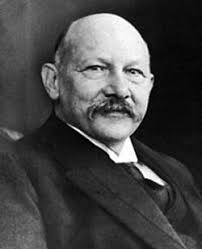
Heike Kamerlingh Onnes
The solution found Hg cooling to temperatures near 0 K. Chose mercury because after several distillations can be considered almost completely pure without relative difficulty of preparation. HK Onnes observed that the resistivity completely disappeared around 4K. He had discovered the superconductividad.HK Onnes received the Nobel Prize in Physics for his research on low temperature materials two years later, in 1913.
In 1933, Walter Meissner and Robert Ochsenfeld discovered the "Meissner effect", which tells us that during his state superconducotr, a material repels the magnetic field.
Meissner Effect
Over the next few years, superconducting materials are discovered Uneven increasingly higher temperatures.
1941: Niobium nitride, superconducting at 16 K.
1953: Vanadium - Silicon superconductor at 17.5 K.
diamagnetism levitation for a clear example of the Meissner effect
1957: John Bardeen, Leon Cooper and John Schiefer agreed to develop the first theory on superconductivity. According to this, the electrons are grouped in pairs, called Cooper pairs, through the attractive force of an electron after the local polarization of the network of positive ions. It is known as BCS theory
1960-69: We develop a superconducting Niobium - Titanium for a particle accelerator in England. You can start looking here and the first applications of superconductivity to advanced technology industries.
1962: manufacturing a superconducting wire Niobium - Titanium for commercial use. Also this year, Brian D. Josephson predicted by Cambridge University that electric current can flow between two superconducting materials even when separated by an insulator or superconductor. Is what is known as "Josephson effect" or tunnels.
Tunneling
1972: John Bardeen, Leon Cooper and John Schiefer win the Nobel Prize in Physics for his theory BSC.
1980: Decade vital for research into superconductors. This same year the first organic superconductor synthesized by Klaus Bechgaard of the University of Copenhagen (and three French.) It must be cooled to 1.2K and bring to high pressure for the superconductivity. This possibility was suggested in 1964 by Bills Little of the University of Stamford.
1986: Alex Müller and Georg Bednorz of IBM Research Laboratory in Rüschlikon, Switzerland, developed a fragile ceramic component superconductor at 30 K. Was used, lanthanum, barium, copper and oxygen for the synthesis of this ceramic
1987: Researchers at the University of Alabama-Huntsville substitute for Lanthanum Yttrium in the molecule and Alex Müller Georg Bednorz reaching a critical temperature of 92K. YBaCuO
1993: The first synthesis of mercury-cuprates was developed at the University of Colorado and the team of A. Schilling, M. Cantoni, JD Guo and HR Ott of Switzerland. Until then it had reached a 138 Tc K. This material was obtained with thallium-doped, mercury-cuprate compressed elements mercury, thallium, barium, calcium, copper and oxygen.
1997: Researchers found that at temperatures near absolute zero of an alloy of gold and indium are superconducting and a natural magnet. However, the conventional wisdom supports a material with such properties may not exist since more than half a dozen of these components have been found.
section of superconducting wire
2005: Superconductors.ORG found that the increase in the weight ratio of the planes between layers of perovskites can increase the transition temperature Tc significantly. This allowed the discovery of at least 30 new high-temperature superconductors.
2008: March 6, 2008 found that the compound:
(SnPb 0.5 In 0.5) Ba 4 Tm 5 Cu 7 O 20 +
superconducting properties has about 185.6 Kelvin, which is the first superconductor material to "room temperature" (-87.4 º C).




.jpg)


